

CRANIOPLASTY
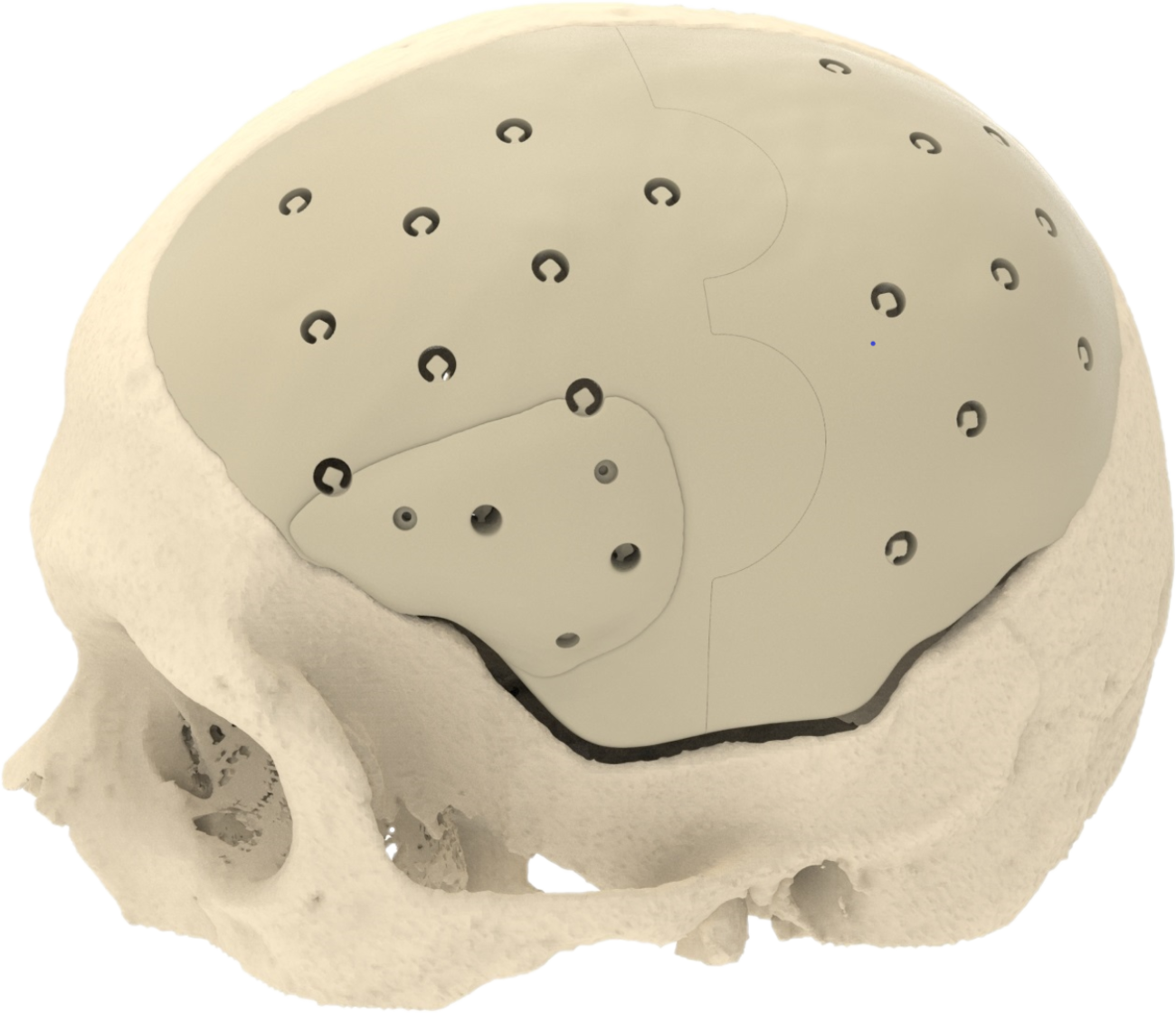
Patient-specific cranial plates are mainly used for reconstructive surgery after decompressive craniotomy after trauma, to shield the unprotected brain from external impact, pressure, and infections. When grafting the original bone flap or autologous split calvarial grafts are good options. Rather, a customized PEEK or Titanium cranial plate forms a fantastic alternative to acryl or Hydroxyapatite. However, patient-specific onlay cranioplasty can also be indicated to correct cranial deformations for aesthetic reasons. 3D printing together with traditional techniques allows us to integrate several state-of-the-art features. This results in reduced operating time and perfect aesthetic outcomes.
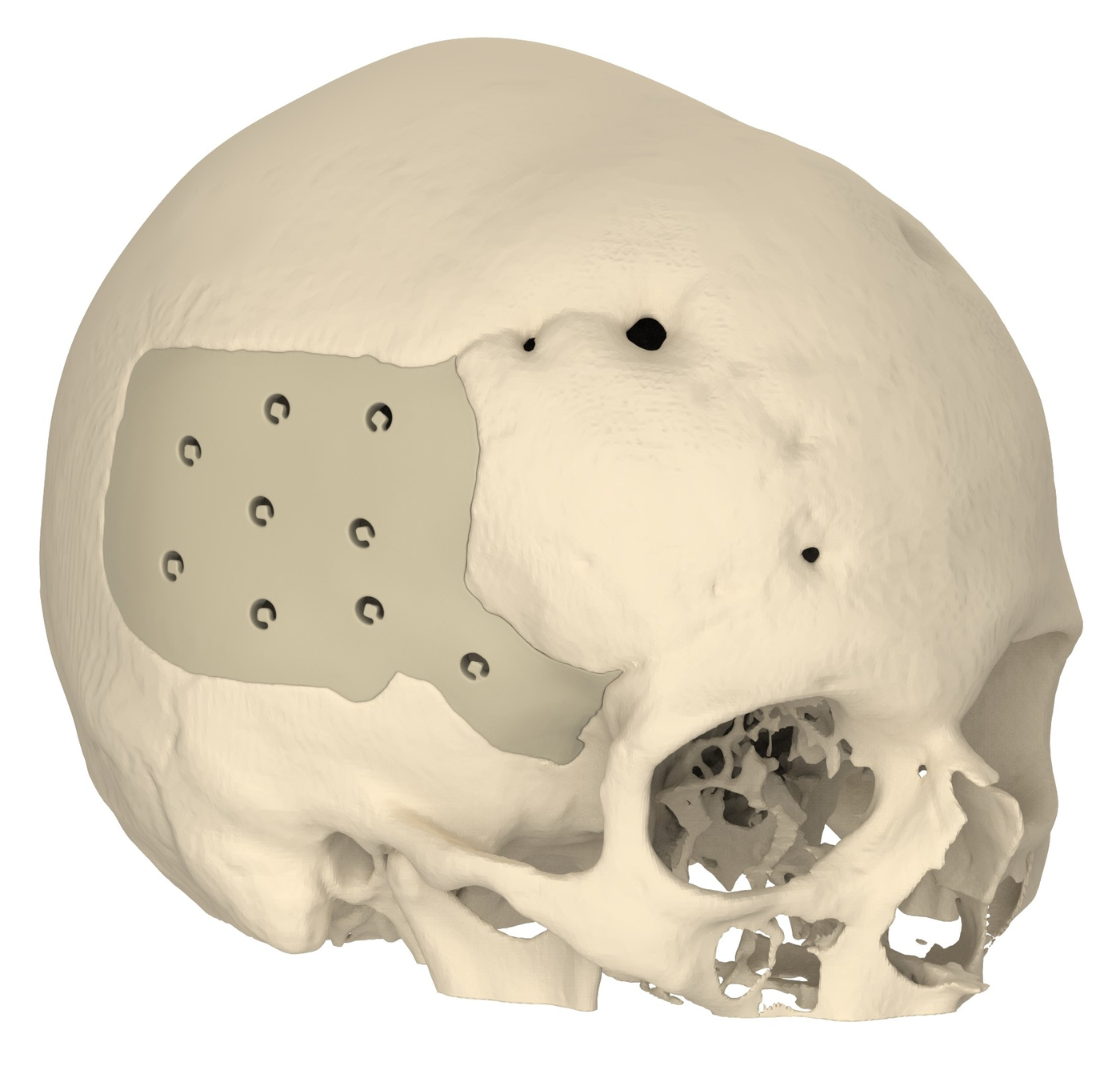
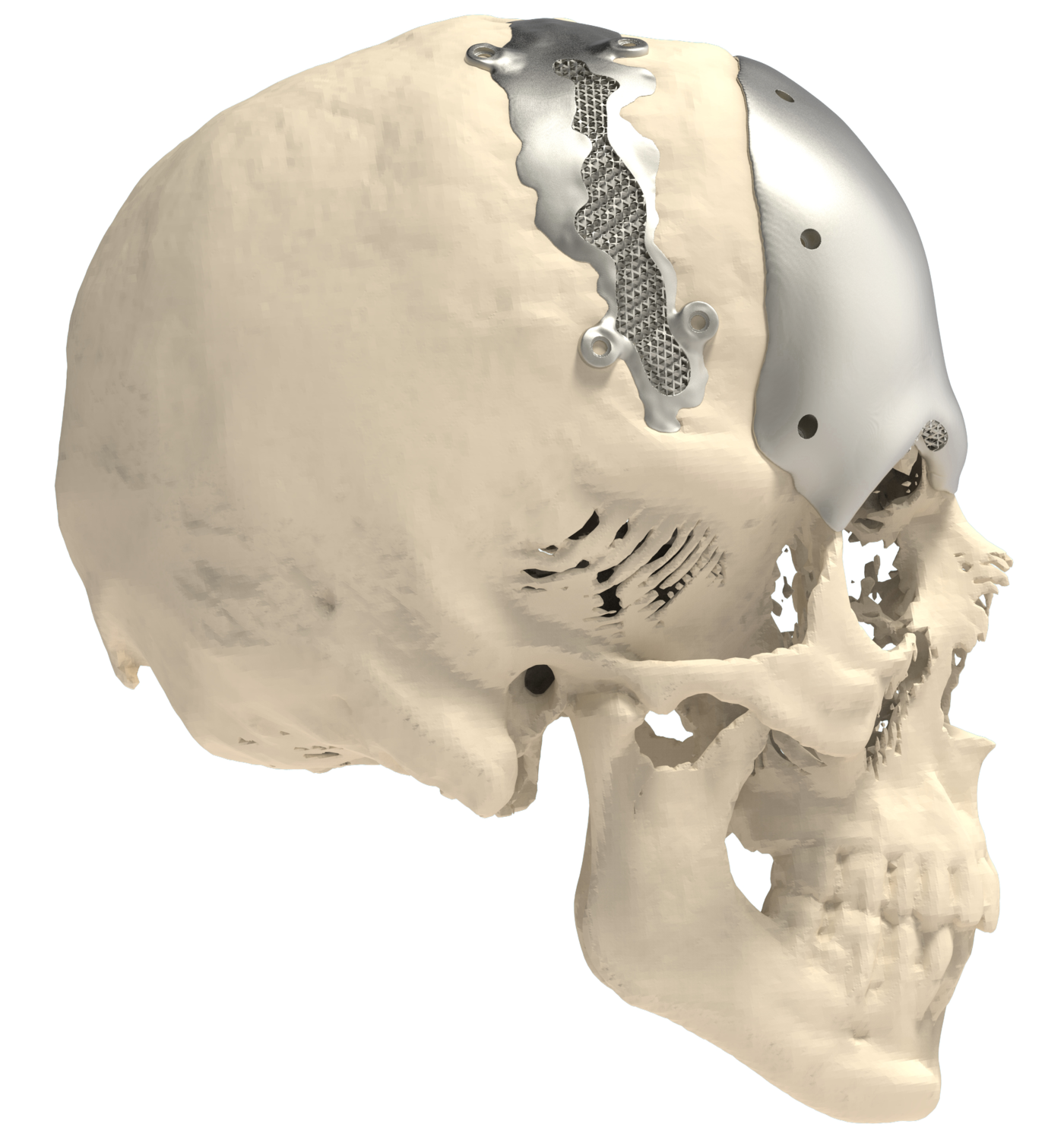
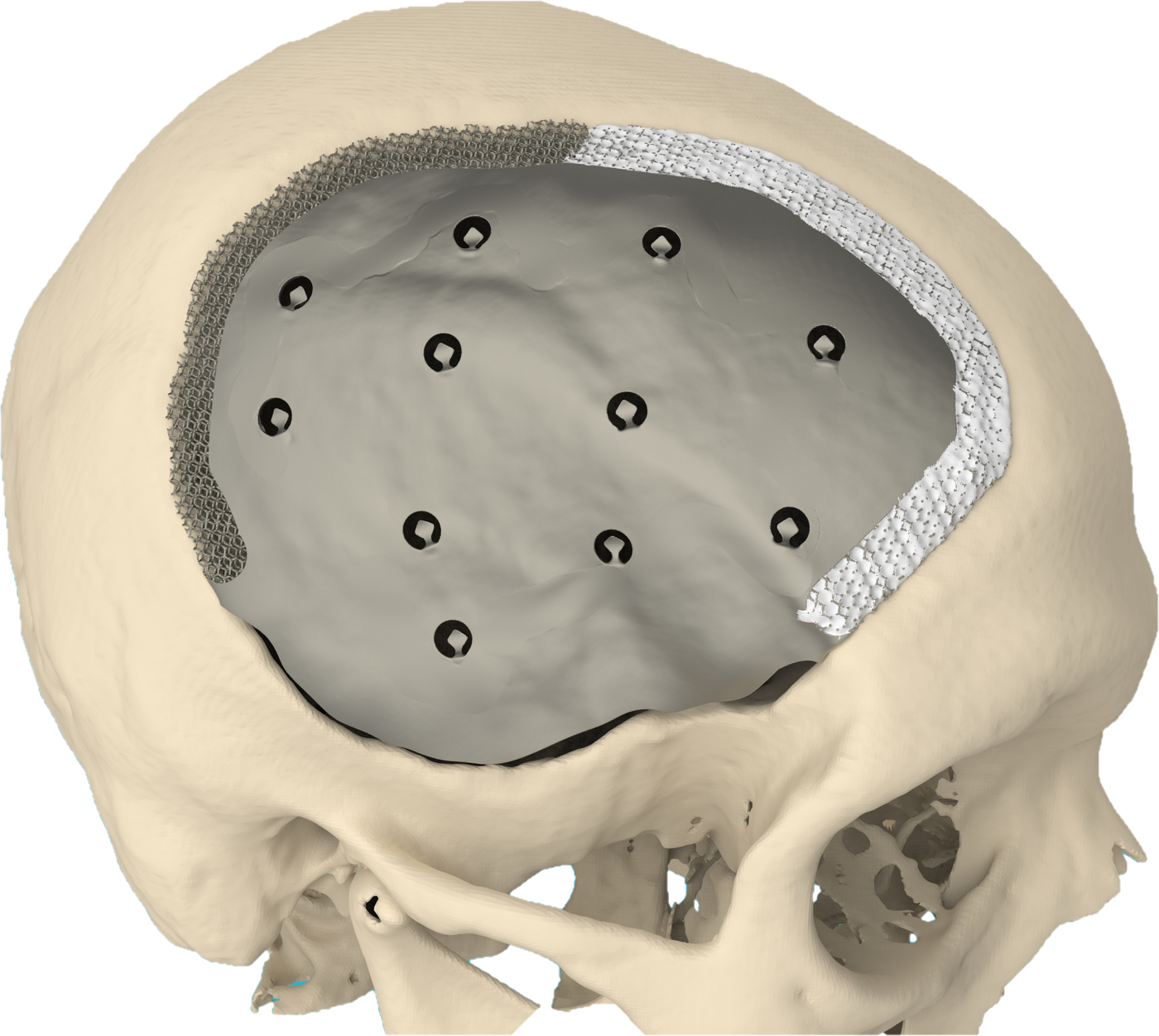
CASE REPORT This patient receiving a Ceramic-Titanium (CeTi) cranioplasty had a history of a subarachnoid hemorrhage F4W1, caused by rupture of a right middle cerebral artery aneurysm that was clipped earlier. Explantation of the “bone flap”…
Read more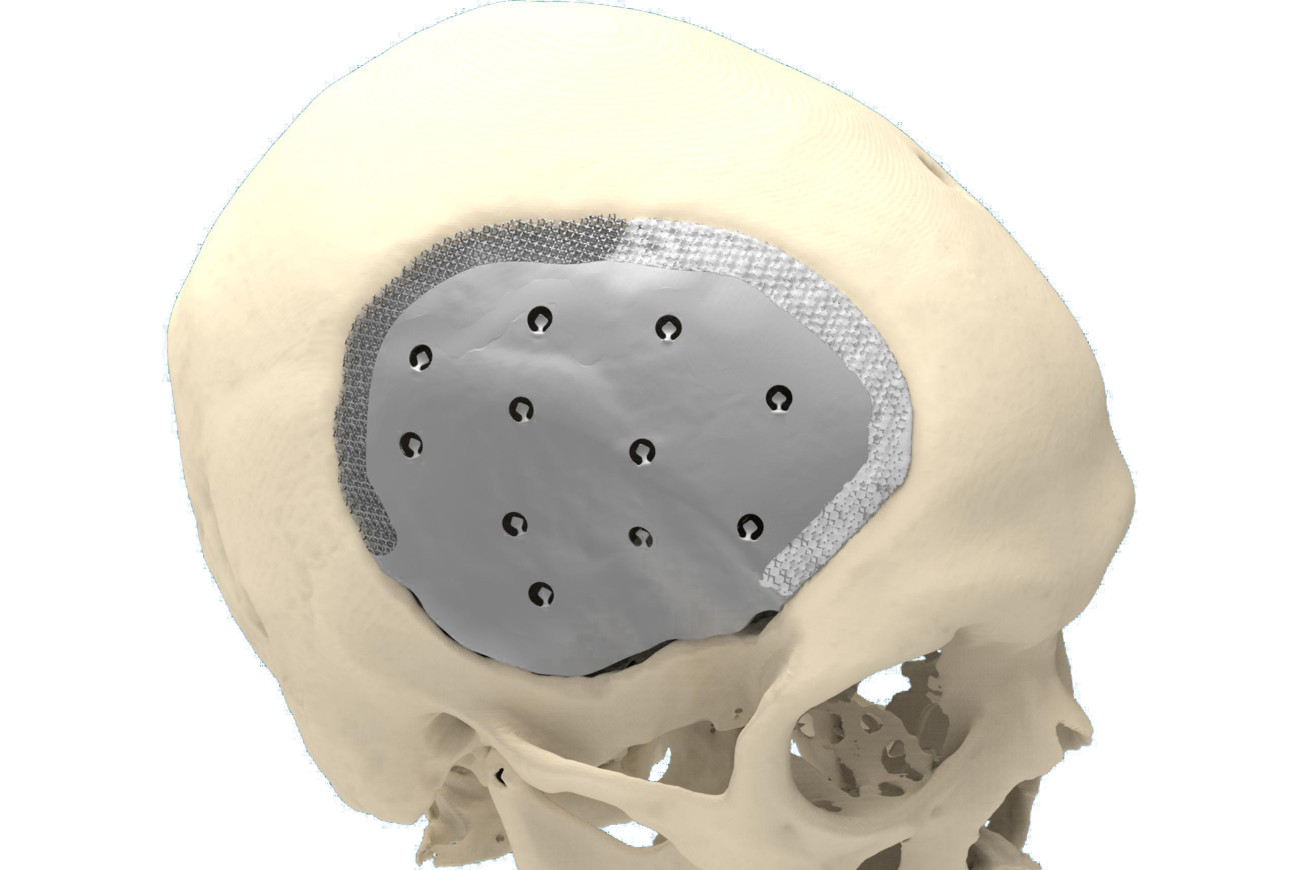
For more information about our concepts